
Yellow circles outlined in yellow show four canals in this tooth. Mandibular molars traditionally have two mesial canals, but this one has an additional mid-mesial canal. The small-field CBCT was able to locate and treat this extra canal, which a full-field scan would likely have missed.
Root Canal Treatment in La Jolla and San Diego: What to Expect and When to See an Endodontist
A root canal removes infected or damaged tissue from inside a tooth so the tooth can be saved rather than pulled. Endodontists complete 2 to 3 years of additional training to perform it, and at La Jolla Micro Endodontics, every treatment uses operating microscopes and 3D CBCT imaging. Most patients return to normal activity the same day or the next day.
Root canal treatment removes infected or damaged tissue from inside a tooth to relieve pain and save the natural tooth from extraction. At La Jolla Micro Endodontics, an endodontist performs it with precision guided by a microscope. Most treatments take one to two visits.
Quick Answer: If a tooth hurts on its own, aches long after hot or cold, or has been cracked or knocked loose, an endodontist can usually save it in one or two visits.
Key Takeaways
- A root canal saves a natural tooth that would otherwise need extraction.
- Endodontists complete two to three years of training beyond dental school, focused on saving teeth.
- More patients are choosing specialists: endodontists performed 44.4% of endodontic treatments in 2024, up from 34.6% in 2020, according to the American Association of Endodontists.
- Most patients feel only mild tenderness for a few days after treatment.
If you are reading this with a toothache, the first question is usually what the treatment will actually feel like. For most people, it is easier than they expect. This guide explains what happens during and after a root canal, along with the signs your tooth needs specialist care. You can also read more about
root canal treatment at La Jolla Micro Endodontics.
What Is a Root Canal, and Why Would You Need One?
A root canal treats the inside of a tooth after infection or damage reaches the pulp, the soft tissue containing nerves and blood vessels. Left untreated, an infected tooth can cause severe pain, swelling, and eventually loss of the tooth. Root canal therapy clears the infection and allows the tooth to stay in place and function normally for many years.
Common reasons a root canal is recommended include:
- A deep cavity that has reached the nerve of the tooth
- A cracked or fractured tooth causing irreversible inflammation of the inner pulp
- Lingering sensitivity to hot or cold, or spontaneous pain
- A tooth that has been knocked loose or fully avulsed from an injury
- Swelling or tenderness in the gum or in other areas of the face
If a tooth has cracked or broken, the practice’s guide on
what to do if you have a fractured tooth covers the first steps to take before your appointment.
What Happens During Root Canal Treatment?
Root canal treatment follows a predictable, well-tested sequence. The endodontist first confirms exactly which tooth and canals are involved, numbs the area, verifies that the anesthesia has taken effect, and places a rubber dam to isolate the tooth. The damaged tissue is then removed, and the canal system is cleaned, shaped, and sealed. Careful imaging at the start supports an accurate diagnosis and makes the rest of the appointment predictable.
- Examination and imaging to confirm the tooth and canal structure involved, including a small-field 3D cone-beam computed tomography (CBCT) scan
- Local anesthesia so the procedure is comfortable throughout
- Removal of infected or damaged tissue from inside the tooth
- Cleaning and shaping of the canal to prepare it for sealing
- Sealing the tooth, after which a permanent crown is often, but not always, placed to restore full strength
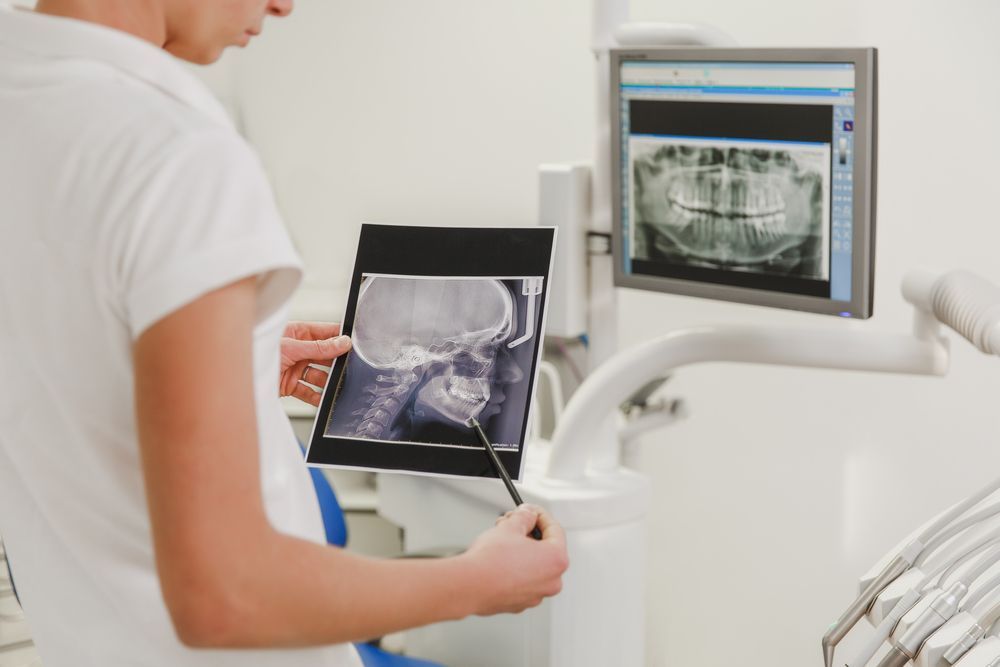
CBCT provides a three-dimensional view of the tooth and surrounding bone that a standard dental X-ray cannot show. La Jolla Micro Endodontics uses a KaVo OP 3D unit, chosen for its diagnostic quality. For root canal care, the scan is limited to a small area, about 5 by 5 centimeters around the tooth being treated, and taken at the unit’s dedicated endodontic resolution. Narrowing the field in this way produces much finer detail and fewer streaks from nearby crowns and fillings, while exposing a smaller area to radiation. At that level of detail, hairline cracks, extra canals, and small infections at the root tip become visible, where a large-field scan of the whole jaw can blur them.


Under the operating microscope, the endodontist opens the tooth to reach each canal. The dark points at the base are the canal entrances.

The same tooth after treatment, sealed and restored.

X-ray of the completed treatment. The bright white lines show the filling material sealing each canal through the roots.
Why Choose an Endodontist Over a General Dentist?
An endodontist completes two to three years of additional training beyond dental school, focused entirely on saving teeth. That specialization means more experience with complex root canal cases, including teeth with unusual canal anatomy, as well as retreatment, surgical, regenerative, and trauma treatments.
The team at La Jolla Micro Endodontics uses operating microscopes and advanced imaging (CBCT), providing the highest level of precision. Microendodontics applies this magnification and imaging at every stage of treatment. This approach helps preserve as much of the natural tooth as possible and supports a high long-term success rate.
Patients are increasingly making that choice. According to American Association of Endodontists data released in September 2025, endodontists performed 44.4% of endodontic treatments in 2024, up from 34.6% in 2020, based on nationwide dental insurance claims. In the same report, 94% of adults surveyed said keeping their natural teeth as long as possible is important to them.
What Should You Expect After Treatment?
Most patients experience mild tenderness for a few days after treatment, which is manageable with over-the-counter pain medication. Most patients can resume normal eating and activity the same day or the day after. A final restoration protects the tooth and restores full chewing strength once the root canal is sealed and asymptomatic.
Patients who have been through it tend to agree. In the AAE’s 2025 consumer survey, 71% of adults who had a root canal said they were glad they chose it over extraction.
Where Can You Get Root Canal Care in La Jolla and San Diego?
La Jolla Micro Endodontics provides personalized root canal care to patients throughout La Jolla, UTC, Torrey Pines, Carmel Valley, Del Mar, Solana Beach, Mira Mesa, Clairemont Mesa, Pacific Beach, Point Loma, Mission Valley, and the greater San Diego area, backed by more than 170 Google reviews with a 5.0-star average.
The practice is located at 8950 Villa La Jolla Drive, Suite A207, La Jolla, CA 92037, and can be reached at (858) 452-2800.
Frequently Asked Questions
Is a root canal painful?
Endodontists are trained to numb patients, and modern anesthesia makes the procedure comfortable. Most patients report the experience is just as easy as, or easier than, getting a filling, and any tenderness afterward is mild and short-lived.
How long does a root canal take?
Most root canals take one to two appointments, depending on the tooth, its presentation, and the complexity of the canal system. Your endodontist will explain how many visits to expect once imaging confirms what the tooth needs.
What is the difference between an endodontist and a general dentist?
A general dentist provides broad oral health care, while an endodontist completes two to three years of additional training focused specifically on saving teeth. Endodontists typically handle more complex or unusual cases and provide diagnosis, pain management, root canal treatment, retreatment, regenerative treatment, surgery, and trauma management.
Do I need a crown after a root canal?
Often, yes, especially for back teeth that handle heavy chewing pressure. A crown restores strength and protects the tooth long term, but every tooth is different, and your endodontist will discuss your options at your treatment appointment.
What happens if a tooth is knocked out or fractured in an injury?
A knocked-out or fractured tooth needs prompt attention. Depending on the injury, root canal treatment can often save the natural tooth rather than requiring extraction. Contact the practice as soon as possible after any dental trauma.
Specialist Care Led by Dr. Katherine A. Thomson
La Jolla Micro Endodontics is led by Dr. Katherine A. Thomson, DDS, MS, an endodontist with 25 years of experience who serves as adjunct clinical faculty at USC.She earned her Doctor of Dental Surgery degree at UCLA and completed a two-year endodontics residency at USC and her practice focuses on endodontics and dental traumatology. The practice serves patients in La Jolla, Carmel Valley, Del Mar, Solana Beach, and throughout greater San Diego with advanced, microscope-assisted root canal treatment.
Author: Dr. Katherine A. Thomson, DDS, MS, Endodontist, La Jolla Micro Endodontics
Serving: La Jolla (ZIP 92037) and the greater San Diego area
Know What to Expect
A root canal is a predictable procedure, usually finished in one or two visits, and most patients are back to their normal routine the same day or the next day. If a tooth hurts on its own or aches long after hot or cold, start with a consultation with an endodontist.
To schedule a root canal consultation in La Jolla, Del Mar, Pacific Beach, or anywhere in greater San Diego, call (858) 452-2800.
Related Posts

Root canal therapy Root canal therapy is needed when the nerve of a tooth is affected by decay or infection. In order to save the tooth, the pulp (the living tissue inside the tooth), nerves, bacteria, and any decay are removed and the resulting space is filled with special, medicated, dental materials, which restore the tooth to its full function. Having a root canal done on a tooth is the treatment of choice to save a tooth that otherwise would die and have to be removed. Many patients believe that removing a tooth that has problems is the solution, but what is not realized is that extracting (pulling) a tooth will ultimately be more costly and cause significant problems for adjacent teeth. Root canal treatment is highly successful and usually lasts a lifetime, although on occasion, a tooth will have to be retracted due to new infections. Signs and symptoms for possible root canal therapy: An abscess (or pimple) on the gums. Sensitivity to hot and cold. Severe toothache pain. Sometimes no symptoms are present. Swelling and/or tenderness. Reasons for root canal therapy: Decay has reached the tooth pulp (the living tissue inside the tooth). Infection or abscess have developed inside the tooth or at the root tip. Injury or trauma to the tooth. What does root canal therapy involve? A root canal procedure requires one or more appointments and may be performed by a dentist or endodontist (a root canal specialist). While the tooth is numb, a rubber dam (a sheet of rubber) will be placed around the tooth to keep it dry and free of saliva. An access opening is made on top of the tooth and a series of root canal files are placed into the opening, one at a time, removing the pulp, nerve tissue, and bacteria. If tooth decay is present, it will also be removed with special dental instruments. Once the tooth is thoroughly cleaned, it will be sealed with either a permanent filling or, if additional appointments are needed, a temporary filling will be placed. At the next appointment, usually a week later, the roots and the inside cavity of the tooth will be filled and sealed with special dental materials. A filling will be placed to cover the opening on top of the tooth. In addition, all teeth that have root canal treatment should have a crown (cap) placed over the remaining tooth structure. This will protect the tooth and prevent it from breaking, and restore it to its full function. After treatment, your tooth may still be sensitive, but this will subside as the inflammation diminishes and the tooth has healed. You will be given care instructions after each appointment. Good oral hygiene practices and regular dental visits will aid in the life of your root canal treatment

Save Your Knocked Out Tooth! Top Rated Endodontist in La Jolla Katherine Thomson DDS La Jolla Micro Endodontics Specialize in Root Canals, Retreatments, Apicoectomy, and Cracked Teeth. Call: (858) 452-2800 First Aid Treatment for Knocked-out Adult Teeth: If an adult or (permanent) tooth is knocked out: Work Fast to Replant the tooth. Handle the tooth by the crown (smooth white part), not the root (yellowish pointy part). If the tooth is dirty, gently rinse it in milk or saline for a few seconds. Do not rinse the tooth with water. Holding the clean tooth by the crown, gently put it back into the hole in the gum (socket). Make sure the pointy yellowish root(s) is the part that goes into the socket. Only do this if the person is conscious. It helps to place your other hand on the person's head to stabilize it while putting the tooth back in the socket. Replanting the tooth within 5 minutes ensures the ability to regenerate periodontal ligament cells — the living cells on the root surfaces that connect them to the bone of the tooth socket. Have the person hold the tooth in place by gently biting on something soft, like a wet tissue, or cloth. Assist the person to see an oral health professional immediately. If you can’t replace the tooth yourself: ⇨ Try not to let the tooth dry out - place it in milk or ask the person to spit into a clean container and place the tooth in their saliva. You could also seal the tooth in plastic wrap. ⇨ Do not use water to rinse or store the knocked-out tooth. Keep the tooth moist at all times. The tooth must stay moist at all times, either in your mouth or, if it can’t be replaced in the socket, put it in milk, or in your mouth next to your cheek, or in an emergency tooth preservation kit (such as Save-a-Tooth®). Don’t use regular tap water; root surface cells can’t tolerate that for extended periods of time. ⇨ Seek immediate advice from an oral health professional. ⇨ Act quickly, within 30 minutes, and visit the nearest dentist or endodontist. ⇨ Bring the tooth with you to your emergency appointment. It's best to see the doctor within 30 minutes; however, it is possible to save a tooth even if it has been outside the mouth for an hour or more. ⇨ Endodontists are specialists in saving teeth. Learn more about why you should see an endodontist Primary Teeth Are Not Replanted. Do Not Attempt to Replant a Baby Tooth The major reasons for not replanting a primary tooth include: The baby tooth could fuse to the bone, causing problems when it’s time for it to fall out naturally, and might affect the growth of the adult tooth, bone and gums, causing concerns for the health and normal eruption of the underlying permanent tooth. trauma could damage the developing permanent tooth and there is a risk for nerve damage or an injury to the jaw. Replanting primary teeth may cause infection to spread to the developing permanent tooth or interfere with the normal time sequence of the permanent tooth erupting into the mouth. The more important consideration is to retain space occupied by the lost primary molars, which act as guides for erupting permanent teeth. Therefore, more important than replantation, is to see Katherine Thomson DDS to determine how to maintain the space the primary tooth occupied. This may prevent the need for orthodontic treatment to correct the situation later. What an Endodontist Specialist Does for Patients. Seeing a specialist is best when there is a major dental problem. Dealing with a knocked-out tooth is a huge concern. Endodontists are the specialists best suited to focus on treating oral pain and trauma. These dentists have additional training beyond dental school to perform root canals, save damaged or avulsed teeth and recommend treatment. Dental Problems Associated with the Traumatic Loss of a Permanent tooth Patients frequently ask their Katherine Thomson DDS what will happen in the case of a knocked-out tooth. Beyond the cosmetic effects, is there a reason to replace it? The reality is, losing a tooth is a serious concern. As for permanent teeth, when one falls out, it can cause the other teeth to drift and become loose. This puts them at risk of falling out too. When a tooth is knocked out, there is also potential for bone loss. This event can change the shape of the mouth, causing the face to sag. A person’s speech can change as a result. It is also possible for a lost tooth to contribute to TMJ disorder, which causes significant jaw pain. Best Treatment Options for a Knocked-Out Permanent Tooth If a patient loses a permanent tooth, it is important to try to find the tooth and preserve it. Katherine Thomson DDS will reimplant it in the socket. Katherine Thompson DDS will examine the tooth and make sure it did not suffer damage when knocked out. After placing it in the socket, Katherine Thomson DDS will splint it to the adjacent teeth, and determine whether the tooth will require further treatment such as a root canal. If reimplantation of the tooth is not possible, Katherine Thomson DDS will recommend a suitable tooth replacement such as a bridge, implant, or partial dentures. The consequences of losing a primary tooth Children celebrate the loss of baby teeth. However, if one is knocked out rather than naturally falling out, there can be negative effects. If the baby tooth is knocked out well before the permanent tooth is ready to take its place, the child could have a gap in the mouth for an extended period that may require monitoring or treatment. Katherine Thomson DDS at La Jolla Micro Endodontics - is ready to address your tooth-loss needs. The thought of having a tooth knocked out is concerning. First there is the trauma that caused the tooth loss, then there is worry about the long term impact on the oral condition. Even losing a baby tooth in this manner can be serious. But take comfort knowing that an endodontist has the training to assess your needs and provide effective care. There is a solid body of research evidence that identifies immediate (within 5 minutes) tooth replacement by replantation, as the most important factor for long-term survival of knocked out (avulsed) teeth. Two other factors are also of importance: The removal of the dental pulp (the tissues in the central “root canal”) by a dentist within a few days, — this tissue once separated from the body, will die and cause infection, unless it is removed and the root canal disinfected and filled. The person's age at the time of injury — the teeth, roots and jawbones are at different stages of formation and maturity at different ages, both of which may affect treatment decisions. When a tooth is completely knocked out or avulsed, the timing of its replantation plays a crucial role in determining its long-term survival. Replantation beyond 12 hours can still lead to the survival of the tooth, but this depends on various factors such as; the age of the person, timely removal of the pulp within two weeks, and completion of root canal treatment. Ankylosis and/or resorption of the tooth are inevitable over time. Replantation decisions and injury treatments must be based on these factors. Avulsed permanent teeth present a unique challenge because immediate management affects long-term outcomes. Unfortunately, lack of knowledge and training has led to many individuals being hesitant to replant an avulsed tooth. Immediate replantation can have a positive lifelong impact for tooth survival. In summary, any permanent tooth that has been completely knocked out should be replanted as soon as possible. Timely action can significantly increase the chances of long-term tooth survival. Factors such as the impact of the person's growth process and enhanced cellular activity must be considered when deciding to replant or remove a recently replanted tooth. It is crucial to seek immediate professional dental help in case of dental trauma or tooth avulsion. Call (858) 452-2800 La Jolla Micro Endodontics office, Katherine Thomson DDS is prepared for emergency care and the long term solutions that are best for missing teeth.
Broken Tooth: Dealing with Dental Trauma Dental trauma is a term used to describe an injury that affects the teeth, gums, or surrounding tissues. It can happen due to various accidents, such as sports injuries, falls, or car accidents. According to statistics in the USA, over 5 million teeth are knocked out each year, with up to 39% of these accidents occurring during sporting activities. Fortunately, emergency dental clinics, like La Jolla Micro Endodontics, led by Katherine Thomson DDS, can provide prompt care for patients who experience dental trauma. These clinics specialize in endodontic treatment, which involves the study and treatment of dental pulp and surrounding tissues. In this article, we will explore dental trauma in-depth and highlight the importance of seeking prompt dental treatment from clinics like La Jolla Micro Endodontics. What to Do When You Have a Broken Tooth A broken tooth is a type of dental trauma that can be caused by a number of factors, such as physical impact, biting on hard objects, or even grinding your teeth. Broken teeth can range from minor chips to severe fractures that expose the tooth's nerves and blood vessels, leading to extreme pain and discomfort. Seeking prompt dental treatment for a broken tooth is crucial to ensure that the damage does not worsen and to prevent complications such as infection or further tooth loss. In this article, we will discuss the importance of seeking dental treatment for a broken tooth and what to expect during the treatment process. Causes and Symptoms of Broken Teeth Broken teeth can be caused by various factors, including: Physical trauma: Accidents, falls, or sporting injuries can cause a tooth to break or become fractured. Biting on hard objects: Chewing on hard objects such as ice, pens, or popcorn kernels can cause teeth to chip or break. Tooth decay: If a tooth has weakened due to decay, it may be more susceptible to breaking. Bruxism: Teeth grinding or clenching can put excessive pressure on teeth, leading to cracks or fractures. The signs and symptoms of a broken tooth may vary depending on the extent of the damage, but some common symptoms include: Sharp pain when biting down or chewing Sensitivity to hot or cold temperatures Swelling of the gums Bleeding around the broken tooth Visible cracks or chips on the tooth If you experience any of these symptoms, it is important to seek dental treatment as soon as possible to prevent further damage or infection. If you have a broken tooth , there are a few immediate steps you can take before seeking dental treatment: Rinse your mouth with warm water to clean the area around the broken tooth. Apply a cold compress to the outside of your cheek near the affected area to reduce swelling and numb pain. Use dental wax or sugar-free gum to cover any sharp edges of the broken tooth to prevent further damage to your mouth or tongue. Take over-the-counter pain relievers such as acetaminophen or ibuprofen to manage any pain or discomfort. When dealing with a broken tooth, there are also a few important do's and don'ts to keep in mind: Do's: See a dentist as soon as possible to prevent further damage or infection. Eat soft foods and avoid biting down on the affected tooth. Maintain good oral hygiene by brushing and flossing gently around the broken tooth. Don'ts: Do not ignore a broken tooth, as it can lead to further damage and infection. Do not try to fix a broken tooth on your own, as this can cause additional damage. Avoid eating hard or sticky foods that can further damage the tooth. It is important to remember that seeking immediate dental treatment is crucial to prevent further damage and ensure the best possible outcome for your broken tooth. Treatment Options for a Broken Tooth Different treatment options depending on the extent of the damage. La Jolla Micro Endodontics is well equipped with the most advanced equipment to treat a broken tooth immediately with superior results. Types of dental restorations used to fix a broken tooth. When it comes to treating a broken tooth, the best course of action will depend on the extent of the damage. Minor cracks or chips may only require a simple restoration, while more severe breaks may require a more extensive treatment plan. Here are some of the treatment options available at La Jolla Micro Endodontics for broken teeth: Dental Bonding: Dental bonding is a simple and cost-effective way to repair minor cracks and chips. The process involves applying a tooth-colored resin to the affected area and shaping it to match the natural tooth. The resin is then hardened using a special light, and any excess material is polished away. Bonding is a quick and painless procedure that can be completed in a single office visit. Dental Crowns: Dental crowns are used to cover a damaged or weakened tooth. They are custom-made to fit over the existing tooth and can be made from a variety of materials, including porcelain, ceramic, and metal. Crowns can restore the shape, size, and strength of the tooth while also improving its appearance. Root Canal Therapy: If the damage to the tooth is deep enough to affect the pulp, which contains the nerves and blood vessels of the tooth, a root canal may be necessary. During this procedure, the damaged pulp is removed and replaced with a filling material. A crown is typically placed on the tooth to protect it and restore its function. Dental Implants: If the tooth is too damaged to be saved with other restorative treatments, it may need to be extracted. In this case, a dental implant can be used to replace the missing tooth. The implant is surgically placed in the jawbone, and a crown is attached to the implant to create a natural-looking and functional replacement tooth. It is important to seek treatment for a broken tooth as soon as possible to prevent further damage and decay. Your dentist can evaluate the extent of the damage and recommend the best treatment option for your individual needs. Prevention Preventing broken teeth is crucial to maintaining good oral health and avoiding dental trauma. While accidents can happen, there are steps you can take to minimize the risk of a broken tooth. Here are some tips for preventing dental trauma and broken teeth: Wear Protective Gear: If you participate in physical activities such as sports or recreational activities, it is important to wear protective gear such as a mouthguard, helmet, or face shield to prevent trauma to your teeth and mouth. Make sure the gear you use fits properly and is appropriate for the activity you are doing. Avoid Hard Foods: Avoid biting down on hard foods, such as ice, hard candy, or popcorn kernels, which can cause your teeth to crack or break. Don't Use Teeth as Tools : Avoid using your teeth as tools to open packages or bottles. This can cause your teeth to chip, crack, or break. Practice Good Oral Hygiene: Brush your teeth twice a day, floss daily, and visit your dentist regularly for cleanings and checkups. Good oral hygiene helps maintain the strength and health of your teeth. Address Dental Issues Promptly: If you have any dental issues, such as decay or a cracked tooth, it is important to address them promptly to prevent further damage. Consider Dental Treatments: Depending on your dental history and risk of dental trauma, your dentist may recommend certain treatments to prevent broken teeth. These may include dental crowns, veneers, or bonding. By following these tips, you can minimize the risk of dental trauma and broken teeth and maintain a healthy, beautiful smile. 10 Frequently Asked Questions and Answers Can a broken tooth heal itself? No, a broken tooth cannot heal itself. It requires dental treatment to restore or repair the tooth. Will a chipped tooth eventually break off? It depends on the severity of the chip. A small chip can usually be repaired, but a larger chip can lead to a weakened tooth structure and increase the risk of a break. What happens if a broken tooth goes untreated? If a broken tooth goes untreated, it can lead to further damage and decay. It may also cause pain and sensitivity and increase the risk of infection. Can a broken tooth cause an infection? Yes, a broken tooth can cause an infection if the inner pulp is exposed and becomes infected. This can lead to a dental abscess and require immediate treatment. Is it necessary to replace a missing tooth caused by trauma? Yes, it is important to replace a missing tooth caused by trauma to avoid shifting of surrounding teeth, difficulty in biting and chewing, and other oral health issues. How can I prevent dental trauma and broken teeth? Wearing a mouthguard during physical activities, avoiding hard and crunchy foods, and practicing good oral hygiene can all help prevent dental trauma and broken teeth. Can I still play sports if I have a missing tooth? Yes, but it is important to wear a mouthguard to protect your remaining teeth from damage and reduce the risk of future dental trauma. How much does it cost to fix a broken tooth? The cost of fixing a broken tooth varies depending on the extent of the damage and the type of treatment needed. It is best to consult with a dentist for an accurate estimate. Is a broken tooth an emergency? A broken tooth can be considered an emergency if it is causing severe pain or if there is a risk of infection. It is best to seek dental treatment as soon as possible to avoid further damage. Can a broken tooth be fixed on the same day? In some cases, a broken tooth can be fixed the same day with dental bonding or a dental crown. However, it depends on the extent of the damage and the availability of the necessary dental materials. In conclusion , dental trauma and broken teeth can cause discomfort and even lead to serious complications if left untreated. Seeking prompt dental treatment is crucial to prevent further damage to the tooth and surrounding tissues. This includes immediate first aid for broken teeth, followed by an evaluation from a dental professional. Depending on the extent of the damage, treatment options may vary, but restorative procedures such as fillings, crowns, and dental implants can help restore the tooth's function and appearance. Prevention is also key, and measures such as wearing protective gear during physical activities can help reduce the risk of dental trauma. Remember, early intervention and treatment can help save a broken tooth and prevent further complications.
